.png)
The Hidden Crisis: How Poor Sanitation Threatens the Right to Live in Dignity
- hearthiveorg

- Jul 14, 2025
- 4 min read
Updated: Aug 23, 2025
At Heart Hive Foundation, we envision a future where every human being—especially vulnerable children and families in underserved communities—can live in dignity, safety, and health. One of the most devastating and often overlooked obstacles to achieving this future is poor sanitation.
While access to education, nutrition, and healthcare is frequently discussed in development circles, sanitation continues to sit on the sidelines. Yet, it is inseparably tied to all these aspects of life. Without safe toilets, clean water, and proper hygiene, survival becomes a daily battle, especially for children living in poverty and conflict zones. As we carry out our mission and voice, Heart Hive Foundation will shine a spotlight on this silent emergency.
Why Poor Sanitation Is a Matter of Survival
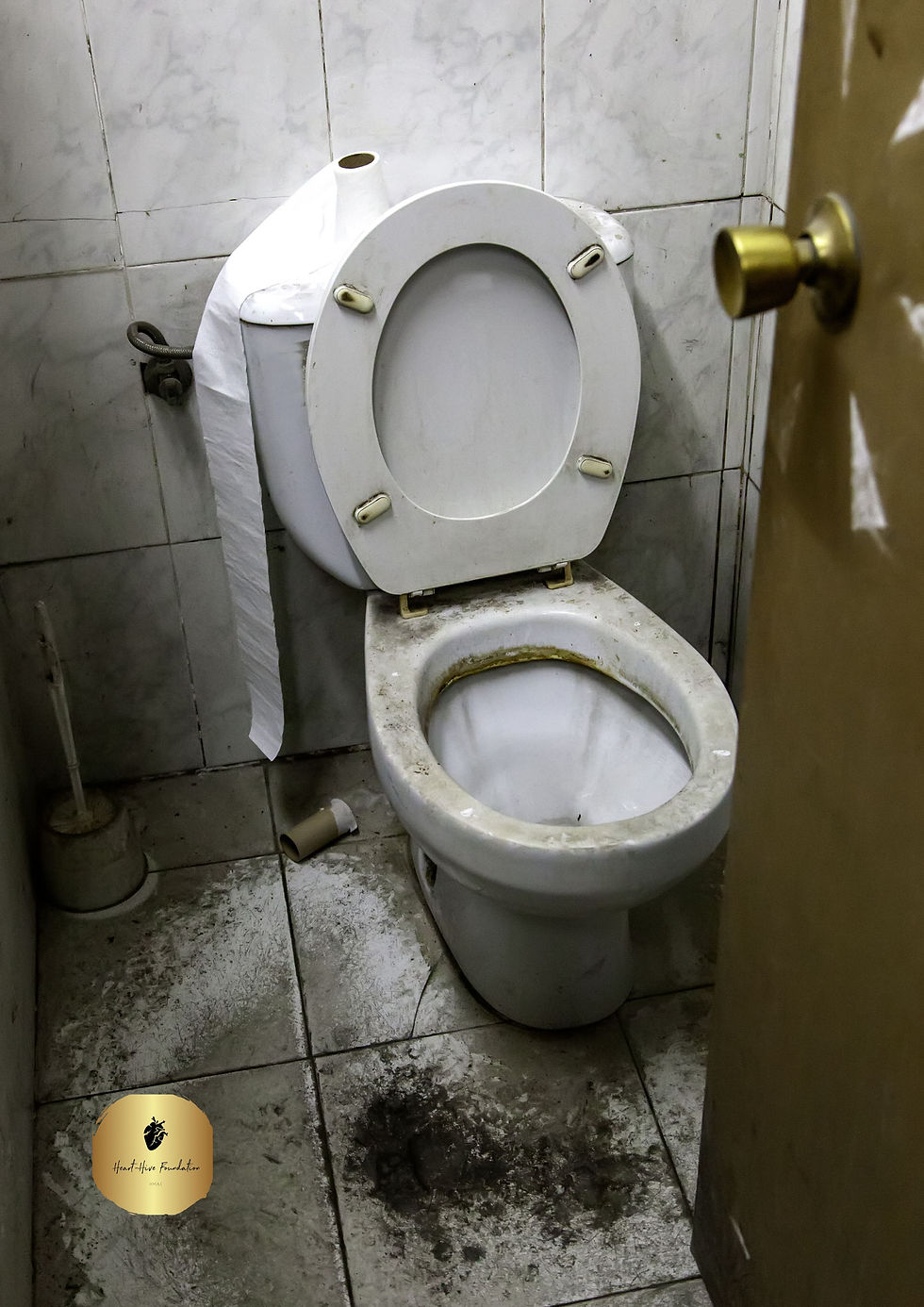
In the communities we aim to serve—those displaced by war, cut off by poverty, or forgotten by systems—poor sanitation will likely be one of the most urgent and recurring issues we encounter. It will not only pose health threats but also damage the very fabric of community life. Families will continue to face the risk of preventable diseases such as cholera, typhoid, and diarrhea, all of which are exacerbated by contaminated water sources and a lack of toilet facilities.
Children will be among the hardest hit. Without safe, hygienic environments, many children will grow up with stunted development—not just physically, but mentally and emotionally. Girls, in particular, will suffer the consequences of inadequate sanitation, especially during menstruation. Schools may be forced to operate without proper latrines or running water, which will hinder learning and force many students to drop out. This is where charity will play a vital role, helping to fill the gaps left by broken systems and bringing critical attention and resources to where they’re needed most.
Heart Hive Foundation will aim to address these interconnected challenges by first raising awareness about how deeply poor sanitation affects everyday life, then creating partnerships to introduce long-term, sustainable improvements.
The Ripple Effect of Unsanitary Conditions

The lack of basic sanitation is not just a health issue—it’s a human rights issue. It will impact food safety, economic development, and educational attainment. For instance, if a water source is contaminated due to nearby open defecation or unsafe waste disposal, agricultural crops may become carriers of disease.
Families may lose income when members fall ill and can’t work. In these situations, aid will be essential to help communities recover, rebuild, and protect their livelihoods from further harm.Healthcare systems will be overburdened with waterborne diseases, making it harder for patients with other urgent needs to receive care.
Furthermore, in communities where toilets and washing facilities are unsafe or nonexistent, women and girls will face a heightened risk of violence. Going to a remote field to relieve oneself in the dark will place them in danger. Heart Hive Foundation will seek to amplify these stories—real and raw—to show donors and policymakers that poor sanitation is not an inconvenience but a deep humanitarian failure.
Reframing the Narrative: Sanitation as Empowerment

In the months ahead, Heart Hive Foundation will begin reframing sanitation not only as a technical problem but as a foundation for empowerment. Access to clean toilets and running water will allow children to stay in school. It will enable mothers to prepare food without fear of contamination. It will restore dignity to refugee families who have spent years living in displacement camps with no privacy or basic facilities.
Through future campaigns, Heart Hive will work to connect the dots between sanitation and confidence, between hygiene and human potential. We will explore stories where simple, community-based solutions—like compost toilets, handwashing stations, or localized waste treatment—will offer a path forward. These stories will guide us as we begin outreach, develop resource materials, and build trust with communities in need.
A Global Issue, Rooted in Inequality
Heart Hive Foundation will prioritize areas where inequality and instability have made sanitation a luxury. In some regions, water scarcity will make it impossible to maintain even the most basic hygiene standards. In others, conflict will destroy infrastructure, leaving families to survive without access to latrines or clean bathing water. Climate change will also worsen the situation, bringing floods that wash human waste into rivers, or droughts that dry up safe water supplies.
Despite global targets like the United Nations’ Sustainable Development Goal 6—which aims to ensure access to water and sanitation for all by 2030—millions will remain left behind. Through advocacy, collaboration, and community engagement, Heart Hive Foundation will work toward bridging this gap and giving underserved families the resources they need to protect their health and dignity.
Be the Change: Action, Awareness, and Advocacy
The issue of poor sanitation will require more than building facilities—it will demand education, trust-building, and sustainable innovation. Heart Hive Foundation will aim to listen first: to learn from the communities themselves what solutions might work in their context. We will plan to train local leaders and volunteers who can teach hygiene practices, help maintain facilities, and serve as advocates for long-term behavioral change.
We will also seek to connect sanitation with broader goals, such as girls' education, maternal health, and climate resilience. Building latrines and clean water systems will be one part of a bigger picture that includes policy influence, storytelling, and shared leadership to ensure access to clean water becomes a lasting reality for every family.
Donors and sponsors are invited to see how even small investments in sanitation can bring transformative results. Volunteers will be called upon to bring skills, innovation, and compassion to a cause that is often ignored but always essential.
At Heart Hive Foundation, we will continue to build platforms where the voices of underserved communities can be heard—especially on issues that are considered taboo or unglamorous. We believe the right to use a toilet in privacy, wash with clean water, and live free from waste-borne disease is not a privilege. It is a right.
As we launch new projects and partnerships, one thing will remain at the core of our advocacy: until we solve the crisis of poor sanitation, we will never truly solve poverty, inequality, or injustice.


Comments